
At Nvidia's GTC, Jensen Huang Will Have to Sell AI to an Increasingly Skeptical Public
Bad AI polling numbers could lead to data center delays. Jensen to the rescue?


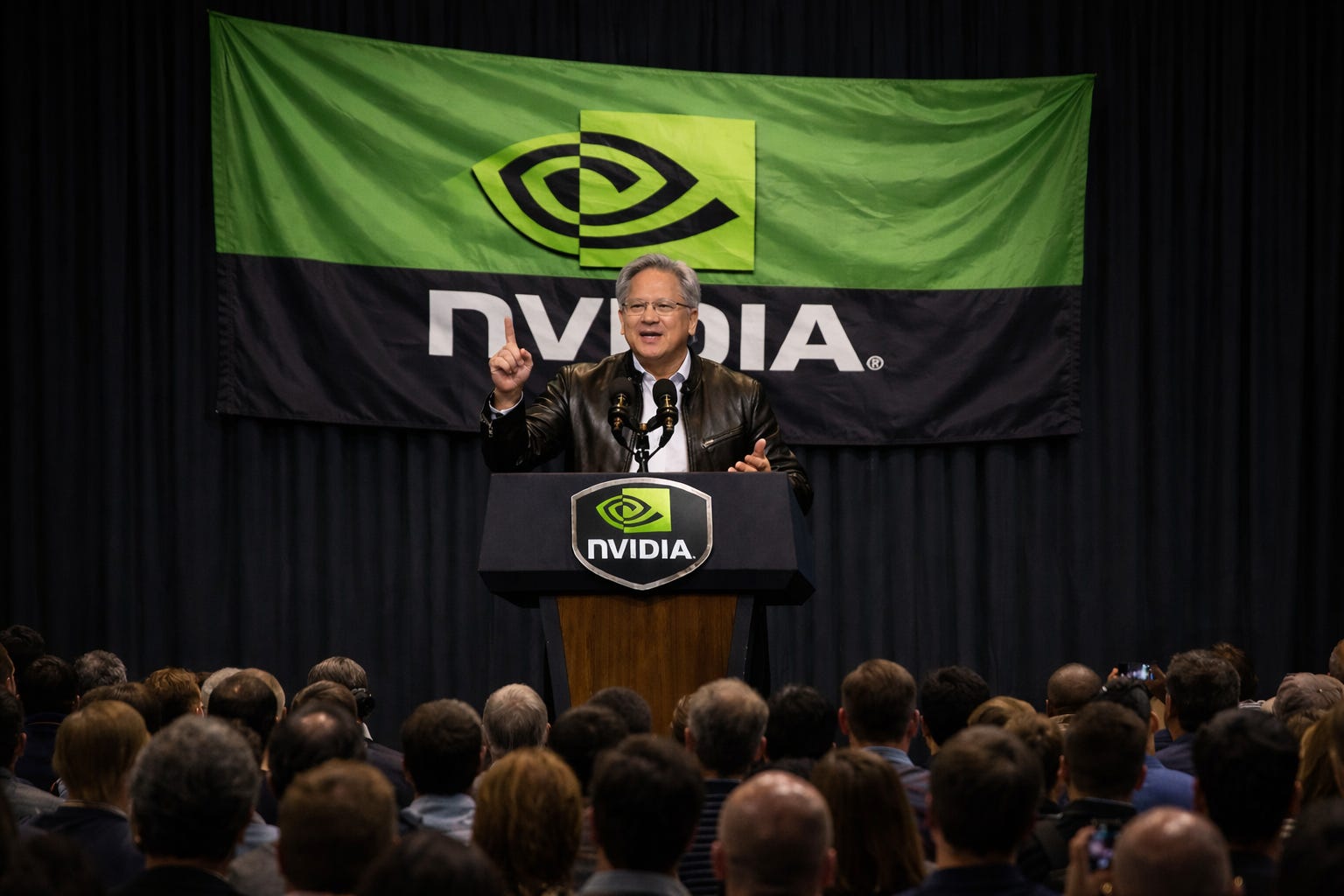
As Nvidia CEO Jensen Huang takes the stage at his company’s flagship GTC event on Monday, the stakes will be especially high. Nvidia’s annual conference is always a major moment for the company’s products and roadmap, but this year GTC will look more like a legitimacy test for the next phase of AI buildout.
Nvidia’s continued expansion depends on high levels of support for AI among the public. And any form of AI backlash will make it more difficult for Nvidia to build data centers, or “AI factories,” as Huang calls them. Unfortunately for Huang, that backlash is here.
A majority of Americans think AI’s risks are greater than its benefits, according to a new NBC poll. Americans are also three times more likely to believe AI will hurt us than help us, according to a survey by YouGov. And Americans believe data centers are bad for the environment, home energy costs, and local quality of life, according to another survey released last week by Pew.
So at GTC, expect a more political talk than usual, where Huang will tout AI’s benefits. And he’s been making the argument already. In a rare Huang-written blog post published last week, the Nvidia CEO framed AI as a job creator and a society improver.
“The labor required to support this buildout is enormous. AI factories need electricians, plumbers, pipefitters, steelworkers, network technicians, installers and operators,” Huang wrote.
Turning to AI benefits in medicine, he added: “When AI takes on more of the routine work, radiologists can focus on judgment, communication and care. Hospitals become more productive. They serve more patients.”
If AI becomes more unpopular, the backlash could hit Nvidia’s bottom line. About a dozen states have had bills introduced to further regulate data centers, according to Good Jobs First, a nonprofit watchdog. The legislation includes proposals to ban or pause data centers or impose expanded requirements related to job creation, energy use, and other factors. About a third of the 4,000 centers in the U.S. are in just three states: Virginia, Texas and California, according to Pew Research Center.
Today, due to a mixture of community backlash and power and equipment constraints, half of the data centers scheduled to come online this year could face delays. In his blog post, Huang wrote “Capacity creates growth,” but to live out that promise, he’ll have to first convince the country that the capacity is worth the costs.
Launch fast. Design beautifully. Build your startup on Framer — free for your first year. (sponsor)

First impressions matter. With Framer, early-stage founders can launch a beautiful, production-ready site in hours. No dev team, no hassle. Join hundreds of YC-backed startups who launched here and never looked back.
Pre-seed and seed-stage startups new to Framer can enjoy:
One year free: Save $360 with a full year of Framer Pro, free for early-stage startups.
No code, no delays: Launch a polished site in hours, not weeks, without hiring developers.
Built to grow: Scale your site from MVP to full product with CMS, analytics, and AI localization.
Join YC-backed founders: Hundreds of top startups are already building on Framer.
Apply to claim your free year →
The Intelligence Report
Anthropic officially filed its lawsuit against the U.S. government over its “supply chain risk” designation. At an initial hearing, company lawyers said at least 100 enterprise customers had raised contract concerns and that impact to 2026 revenue could range from “hundreds of millions of dollars to billions of dollars.”
Meta is reportedly planning layoffs that could hit at least 20% of the company as part of plans to offset costs from spending $600 billion by 2028 on data centers. It could also delay debuting a new AI model codenamed Avocado after performance issues.
Google unveiled AI-powered updates for Maps, which include new ways to answer real-world questions to help plan and navigate trips.
OpenAI debuted new ways to use ChatGPT to help teach math and science through interactive visual explainers for more than 70 core concepts. Meanwhile, the company’s advisers are reportedly worried about plans to release a new “adult mode.”
Microsoft debuted a new AI-powered feature called Copilot Health, which would help connect wearables, hospital records and lab data. Meanwhile, Google has reportedly scrapped an AI search feature that would’ve crowdsourced amateur health advice from around the world.
Amazon has reportedly held internal meetings to deal with engineers using generative AI in ways connected with recent outages.
Apple debuted a new character called “Lil’ Finder Guy,” which some wonder if it might be the company’s new mascot for an upcoming chatbot. It’s also delayed plans for new smart home devices until this fall.
Our notes from SXSW
AI chatter has been everywhere at SXSW 2026, but there’s also been plenty of skepticism. With a few days to go, here are a few things from the first half off this year’s festival:
Cloudflare CEO and co-founder Matthew Prince predicted that online bot traffic will exceed human traffic by 2027 and “will continue to grow after that.”
ElevenLabs said it plans to help 1 million people restore their voices that have been lost from various health issues such as ALS and cancer. The company also premiered a new docuseries called “11 Voices,” which follows 11 people from the U.S. and UK who have ALS, cerebral palsy, and brain injuries that affect their ability to speak.
During a keynote talk, filmmaker Steven Spielberg said he’s okay with AI in some disciples but that he’s “not for AI” if it replaces creativity. He also noted he has not yet used AI in any of his films or TV projects.
Spotify Co-CEO Gustav Söderström announced a new feature called Taste Profile, which offers more ways to personalize on the streaming platform.
Tristan Harris and Anthony Aguirre warned that AI represents the next stage after the dangers of social media, which they argued is already a harmful “baby AI.” They also called for new liability laws, global red lines on uncontrollable systems, and coordinated public and business pressure.
 | A guest post by
|