


SemiAnalysis founder Dylan Patel thinks many of the enormous numbers circulating around the AI infrastructure buildout are still too small.
In an extended conversation on Big Technology Podcast, Patel and SemiAnalysis technical staff member Jordan Nanos argued that demand for compute continues to outrun supply, even as the industry faces limits on construction, financing, and equipment. Their case rests on AI moving beyond coding subscriptions and into more of the economy, from chip design to drug discovery.
“People lack the creativity to understand how returns can be viewed beyond the Claude Code subscription and per-token pricing regime of today,” Nanos said.
Their optimism comes with some sharp qualifications. Patel expects AI to accelerate the shift of economic value from labor to capital, while Nanos described a market where GPU providers can build successful businesses without delivering particularly good service. Both also detailed security failures they encountered while examining the industry.
In our conversation, we discuss what it would take to pay back the infrastructure investment, Anthropic’s business model, Nvidia’s financing backstops, and SemiAnalysis’s ClusterMax ratings of GPU cloud providers. We also cover Oracle’s execution challenges, Google DeepMind’s compute position, and why AI labs might keep their best models to themselves. The Q&A below is lightly edited for clarity, with my questions condensed and filler, repeated words, and production interruptions removed.
The Scale of the AI Buildout
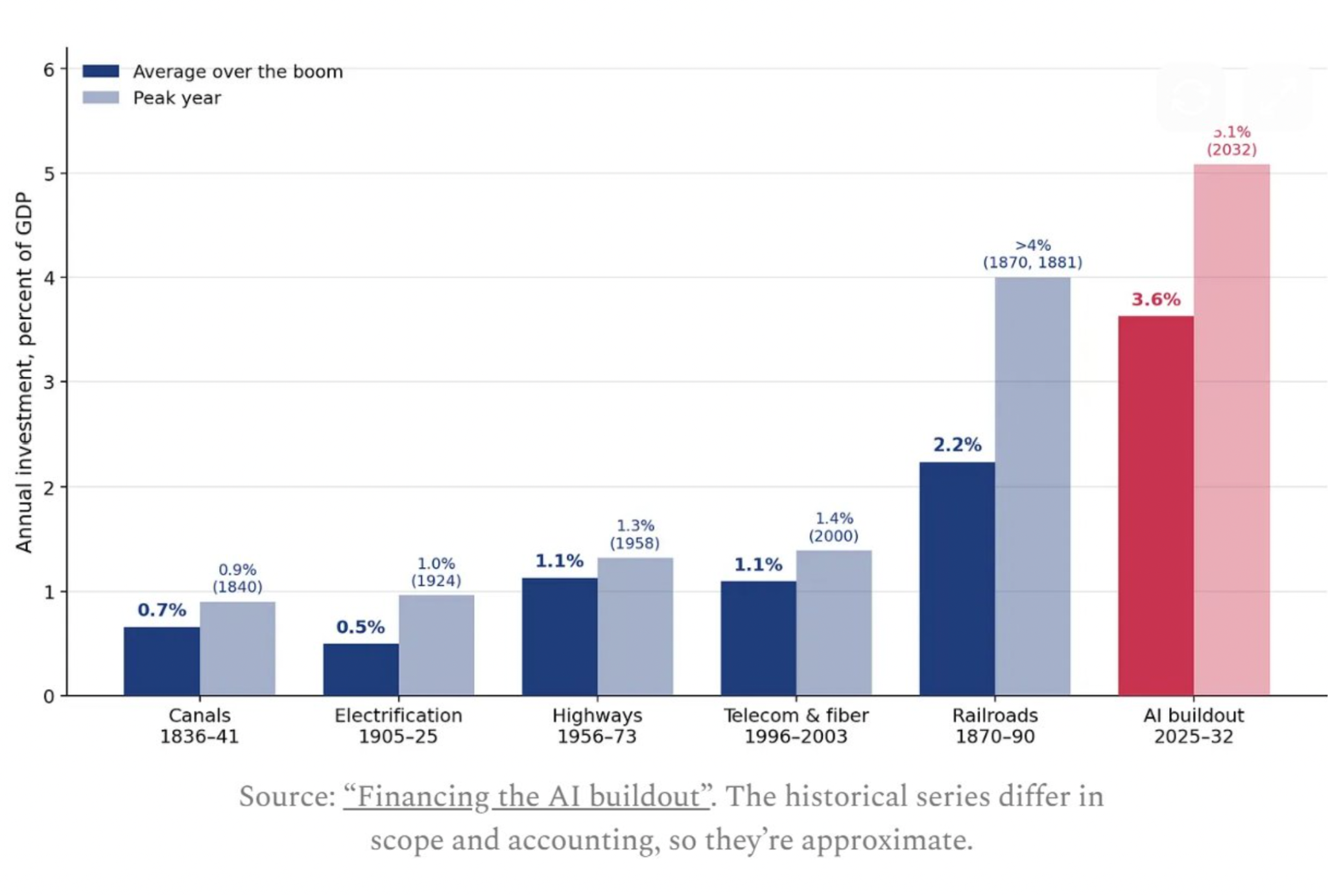
Alex Kantrowitz: A chart circulating on X puts the AI infrastructure buildout at about 3.6% of GDP in an average year, compared with 2.2% for railroads. Is that the right way to measure its scale, and what does a buildout this large mean?
Dylan Patel: The first thing when that chart was going around, I was like, “Whoa, people’s numbers are too low.” It’s actually much higher than that already.
Really? Share the real numbers.