

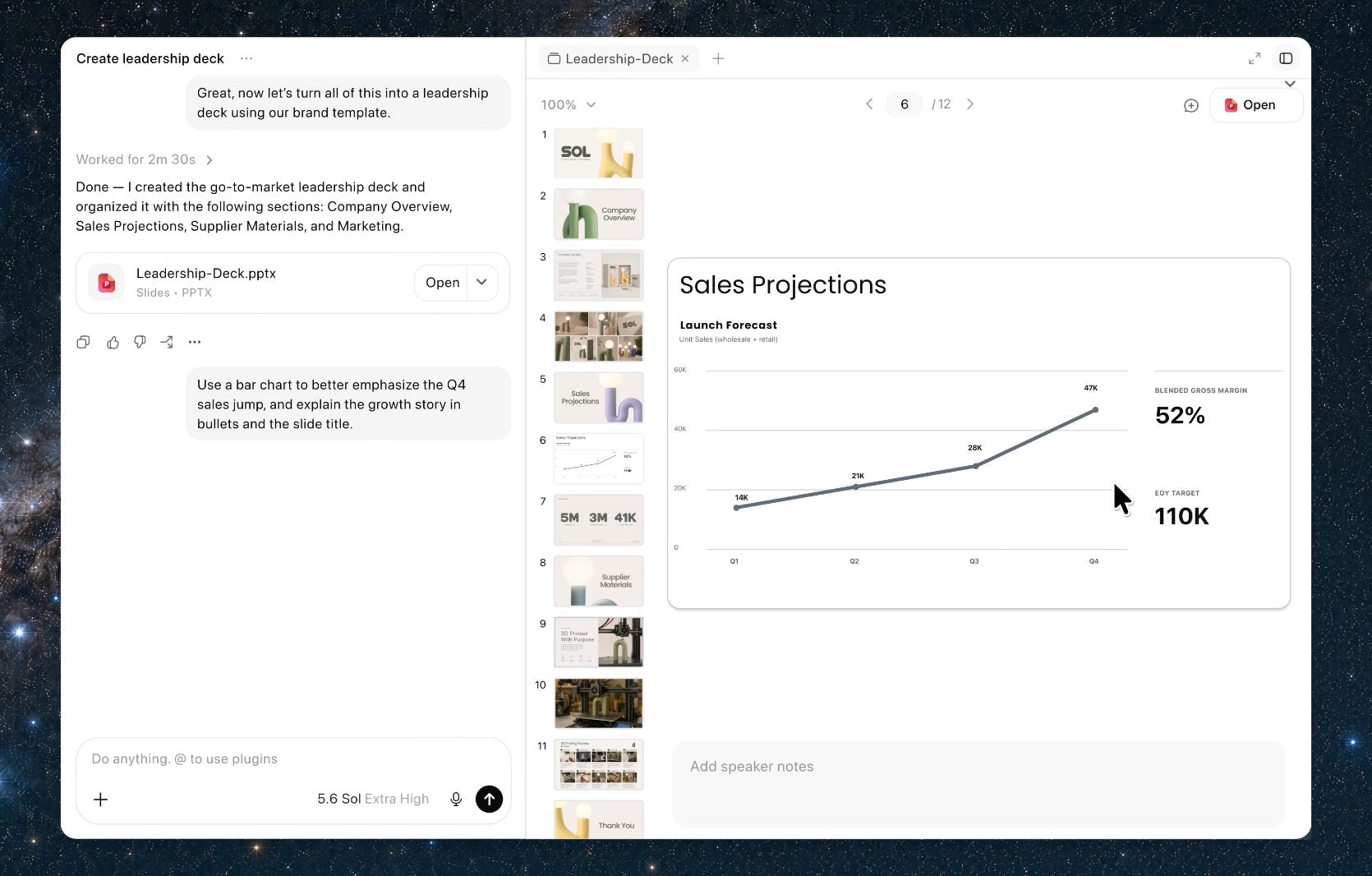
OpenAI finally released the first version of its long-promised Superapp this week, combining ChatGPT, coding, and internet browsing into a single application, while adding a new ChatGPT Work mode akin to Anthropic’s Claude Cowork.
Soon after the product debuted, I spoke with Andrew Ambrosino, OpenAI’s lead for the Codex and ChatGPT app, about how the company is thinking about its unified product, and where it goes from here. Here are my notes from the call:
This is the long-promised ‘superapp’
“This is the start of the superapp,” Ambrosino told me. “Anything that you can do on a computer, you can now do with this app.”
An array of use cases
Unlike standard ChatGPT, which can answer queries and create images for you, the new ChatGPT can take over your computer and browser and get things done for you. The limit, it seems, is whatever you can imagine doing with a computer.
“We have people editing videos on it,” Ambrosino said. “People creating Word docs, spreadsheets, slide decks, people writing production-grade code for post-training stacks, we have people here using this app to create sites to track launches, which we did for this launch.”
Code at the core, but a toggle
There’s a toggle between the more code-intensive version of the app, which is OpenAI’s Codex product, and its less-technical version, ChatGPT Work. Code is foundational to both experiences, Ambrosino told me, but the Codex version is more useful for digging into the code itself. “The toggle does not affect what this product can do,” he said. “It affects the experience that you have around it.”
I asked Ambrosino why not have the product itself determine your intent and guide you through the appropriate experience? “There are a lot of use cases where we can’t necessarily tell what you want,” he said.
An intention to not over-refuse
One of the more frustrating aspects of using AI tools is how often they will refuse to take an action. Ask some AI agents to go book something with your credit card, for instance, and they will outright say no. OpenAI is trying to free its ChatGPT Work product from such constraints, while still including permission requests to make sure it doesn’t go rogue.
“A lot of these general knowledge work modes nerf things that coding can just do,” said Ambrosino. “That’s something we’re trying to avoid here.”
Careful use of memory
One of OpenAI’s advantages is that it has years of chat logs with users that can inform the decisions it makes when it takes action on the web. If you’ve used ChatGPT to research barbers in your area, for instance, that could help it book an appointment for you based on your preferences. But, after some internal debate, OpenAI won’t rely heavily on what it knows about you for this new experience. However, if you proactively ask it to rely on what it knows about you, Ambrosino said, it will then tap into its memory.
The plan to compete with Anthropic
Anthropic arrived at this vision earlier, with products like Claude Code and Cowork bundled into the Claude app. Asked how OpenAI will compete, Ambrosino replied: “Going first has its weaknesses sometimes,” adding: “We have seen how this stuff should work, and now we can go execute on it.”
How A Beauty Company Built An AI Agent — With Rachel Williamson and Josh Siebert (sponsor)

Rachel Williamson is the VP of People Strategy, Systems and Operations at Ulta Beauty and Josh Siebert is the VP of AI Data and Enterprise Platforms at Ulta Beauty. The two leaders driving one of the most hands-on AI automation programs in retail today. Both join us for an episode on how Ulta Beauty deployed ServiceNow's AI-powered HR platform across its 65,000-person workforce, and what happened next. Tune in to hear how they decided what to automate vs. where to keep humans in the loop, why personalization beats the employee handbook, how the rollout changed hiring plans, and what's next as Ulta brings AI to onboarding and employee life cycles. Hit play for a real-world look at what AI in action actually looks like inside a major company.
What Else I’m Reading, Etc.
The ChatGPT Superapp doesn’t yet hit the mark [Spyglass]
OpenAI’s latest model is 54% token efficient for agentic coding than previous iterations [CNBC]
An Ivy League professor claims almost his entire class used AI to chat [Inside Higher Ed]
U.S. Men’s Soccer star Christian Pulisic remains an enigma [ESPN]
This Week On Big Technology Podcast: Meta CTO Andrew Bosworth: Our Path To Frontier AI, Renting Models, Consumer AI’s Struggles

Andrew “Boz” Bosworth is the chief technology officer of Meta. Bosworth joins Big Technology to discuss why Meta fell behind in the frontier AI race and how it plans to turn its models, products, and distribution into an advantage. Tune in to hear his candid explanation of what went wrong with Llama, why the best AI products will use multiple models, and what it will take for consumer agents to break through. We also cover Meta’s AI glasses, the future of augmented reality, employee tracking and training programs, AI companions, and the painful process of adapting a company to a technological revolution. Hit play for a revealing conversation about Meta’s AI comeback and the products that could shape how we interact with computers.
You can listen on Apple Podcasts, Spotify, or your podcast app of choice
Thanks again for reading. Please share Big Technology if you like it!
And hit that Like Button or have your superapp do it!
My book Always Day One digs into the tech giants’ inner workings, focusing on automation and culture. I’d be thrilled if you’d give it a read. You can find it here.
Join Big Technology’s Private Discord Server!
Where we’ll talk about this story, the latest in AI, the week’s podcast, and plenty more. You can sign up via the link below: