

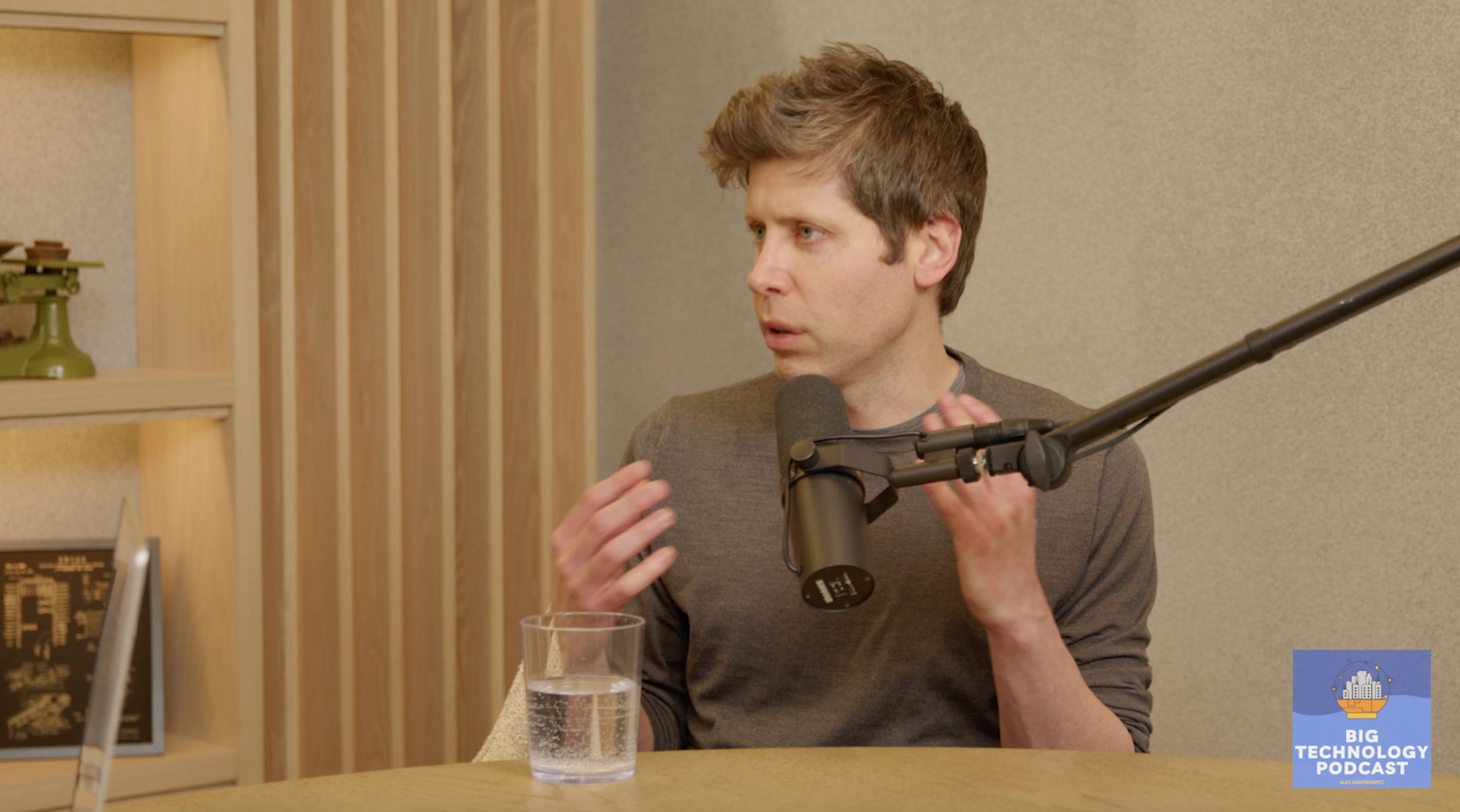
Sam Altman spoke candidly and substantively about his plans for OpenAI in an hour-long conversation on Big Technology Podcast this week (Apple Podcasts, Spotify, or YouTube). And as we spoke, I started to get a picture of what OpenAI’s future might look like.
Altman was candid about OpenAI’s plans to build deeper memory into ChatGPT, how it will handle more people forming emotional bonds with the bot, and when an OpenAI IPO might be coming.
Following our conversation, here are seven big thoughts about OpenAI’s strategy and where it’s heading, starting with that memory feature:
ChatGPT Will Remember You, And That’s a Potential Moat For OpenAI
Altman’s vision for ChatGPT’s memory is ambitious, aiming for the bot to remember almost everything about us if we choose. “Even if you have the world’s best personal assistant, they can’t remember every word you’ve ever said in your life. They can’t have read every email. They can’t have read every document you’ve ever written,” he told me. “AI is definitely gonna be able to do that.”
If OpenAI is able to build “infinite, perfect memory,” as Altman put it, that could change the ChatGPT experience in a dramatic way. The bot, for instance, could remember decisions you consulted it on in the past, consider the outcomes, and advise you on current choices. There will be serious privacy considerations to wrestle with as well. But should the plan work, the switching cost to leave ChatGPT could be extremely high. Altman believes people will get to know an AI bot, invest in it, and then stick around. With memory, ChatGPT could have a lock in.
Lots of People Will Build Relationships With ChatGPT
As OpenAI improves ChatGPT for consumers — building in EQ and memory — many people are going to build relationships with it. Altman said he was surprised by how many people already want to form a bond with the bot. “People like their AI chatbot to get to know them and be warm to them and be supportive,” he told me. He plans to give users plenty of leeway to determine how close they want to get to it.
Altman told me ChatGPT will not pressure its users into forming exclusive relationships with it, but he’s convinced that some of his competitors will. It’s a scary thought. More engagement often leads to more money. When an emotional bond is the product, it’s unnerving to think about where the incentives lead.
Altman And Jony Ive Will Build Multiple AI Devices
Instead of a singular AI device, Altman said he and ex-Apple design leader Jony Ive are working on a small family of devices that will work together to understand your context and help you as you go about your life.
“There will be a shift over time to the way people use computers,” Altman said, “where they go from a sort of dumb reactive thing to a very smart, proactive thing that is understanding your whole life, your context, everything going on around you, very aware of the people around you, physically or close to you via computer that you’re working with.”
Altman suggested the bot, via one of these devices, could sit with you in a meeting and whisper in your ear if it anticipates you forgetting a question. The device isn’t expected to debut within the next year.
More below…
AI’s next hurdle: orchestration, not adoption. (sponsor)

AI agents represent the next evolution in business process automation. However, without the right orchestration, they can lead to disconnected workflows and growing tech debt. Learn how agentic process orchestration connects AI systems, devices, and people for efficiency and control.
Expect A Big GPT Release Early Next Year
It may be some time until we see GPT-6, but…