



SXSW 2026 kicks off on Thursday and AI news should be pouring out of Austin.
This year’s “Tech & AI” track features about two dozen sessions, making up about a third of the festival’s total featured talks. AI-related sessions will feature a mix of researchers, media executives, and technologists including Spotify co-CEO Gustav Söderström, Cloudflare co-founder Matthew Prince, and Apple Fellow Phil Schiller.
The frontier labs and their critics will be represented across various panels and workshops, including a talk with OpenAI execs about infrastructure projects like Stargate and a fireside with Tristan Harris, co-founder of the Center for Humane Technology, about run-away AI.
One of the quirkier events on the tech calendar, SXSW’s assortment of CEOs, ethicists, futurists, and filmmakers should provide us with different perspectives beyond the whims of the usual suspects.
A few AI-related themes to expect from SXSW Interactive 2026:
AI moves from models to deployment: The conversation is shifting away from LLM hype toward the rest of the stack: infrastructure, agents, enterprise applications, and more for consumer businesses, creators, media companies, etc.
Living with AI’s consequences: Instead of debating if AI is here to stay, this year will feature more talks about ways people are dealing with the new reality. Many sessions focus on governance, guardrails, intellectual property, education, and the long-term cognitive effects of AI.
The post-search internet: Multiple panels explore how AI agents and generative search could reshape news, web traffic, and media economics. Speakers include BuzzFeed’s Jonah Peretti, Mark Cuban (“Can Media Survive AI?”) and a session on “The Internet After Search” featuring Cloudflare co-founder Matthew Prince.
A few predictions for who might make news at SXSW 2026
There will likely be plenty of news throughout the next week, from AI companies, other tech companies,and consumer brands using tech in new products. Announcements will likely come from hardware, software and everything in between. For example, Rivian will reveal its new R2 vehicle.
One company to keep an eye on this week is Nothing, whose CEO Carl Pei will be in Austin for an SXSW featured talk about shifts for things like AI hardware. Even if Nothing doesn’t announce anything new, SXSW could offer a glimpse of what the next wave of AI-powered wearables might look like after the splashier launches at CES.
More on the SXSW calendar below….
Launch fast. Design beautifully. Build your startup on Framer — free for your first year. (sponsor)

First impressions matter. With Framer, early-stage founders can launch a beautiful, production-ready site in hours. No dev team, no hassle. Join hundreds of YC-backed startups who launched here and never looked back.
Pre-seed and seed-stage startups new to Framer can enjoy:
One year free: Save $360 with a full year of Framer Pro, free for early-stage startups.
No code, no delays: Launch a polished site in hours, not weeks, without hiring developers.
Built to grow: Scale your site from MVP to full product with CMS, analytics, and AI localization.
Join YC-backed founders: Hundreds of top startups are already building on Framer.
Apply to claim your free year →
Here are the top AI talks happening during the first half of SXSW 2026.
March 12:
Rivian will officially reveal the R2 at its Rivian Electric Roadhouse, which will be open throughout the festival. On March 13, the company will host another event called “Are you Faster Than a Robot?”
March 13:
One of the featured sessions will be a talk with Gustav Söderström, Co-Chief Executive Officer Spotify, will speak on stage about the “Past, Present And Future Of Delivering Creativity To The World” with singer/songwriter Lainey Wilson and Ohalo CEO David Friedberg.
Steven Spielberg will join SXSW for a keynote about the future of movies, moviegoing and his upcoming film “Disclosure Day.”
In a session titled “How We Could Lose Control: Avoiding the Paths to Runaway AI,” Tristan Harris and physicist Anthony Aguirre will discuss how humanity could lose control of AI systems and the steps needed to prevent it.
March 14:
Amy Webb, CEO of the Future Today Strategy Group, will deliver her annual Emerging Tech Trends report. This year’s theme is “creative destruction.”
Execs from OpenAI and the San Antonio Spurs discuss how the NBA team is using AI to personalize experiences for fans, applying human-centered design and improving internal decision-making.
Cloudflare co-founder & CEO Matthew Prince and Manueto Ventures CEO Stephanie Mehta will talk during a session about “The Internet After Search.”
Experts from Microsoft, the Allen Institute and the University of Washington will discuss AI and future scientific discovery.
March 15:
Tech journalist Karen Hao, computer scientist Timnit Gebru, and MacArthur Foundation president John Palfrey discuss how to build AI systems and governance frameworks that prioritize humanity instead of just Silicon Valley.
David Rogier, MasterClass founder and CEO, will discuss how AI could reshape storytelling through personalized narratives and offer ways to challenge assumptions about creativity and culture.
The Intelligence Report
Anthropic and the Pentagon continued their dispute, with the government officially designating the startup as a “supply chain risk,” forcing federal agencies like the State department, Treasury and others to pause their use of Claude.
OpenAI, which faces backlash over its Pentagon agreement, is reportedly in talks for a NATO contract related to unclassified networks.
Meta signed a new AI data licensing deal with News Corp with a contract reportedly worth up to $50 million a year.
OpenAI debuted its latest model, GPT-5.4, which the company claims cuts hallucination rates by 26.8% when using the web and by 19.7% when using internal sources.
Google released Gemini 3.1 Flash-Lite, which the company says will help developers handle high volume tasks at scale with lower costs.
The White House and seven major tech AI companies agreed to a new “ratepayer protection pledge,” with Microsoft, Meta, OpenAI, Oracle and others agreeing not to pass on costs to consumers from AI data centers.
Meta faces a new class-action lawsuit over its Ray-Ban Meta AI smart glasses over privacy concerns that involve allegations of Meta workers watching users’ sensitive content.
Apple debuted its new M5 chips for the MacBook Pro and MacBook Air, which promise to offer better on-device AI performance.
Oregon lawmakers passed a new AI bill to improve chatbot safety rules for kids in the state. The bill now goes to the governor for approval and could be the first major AI chatbot safety bill in a state to pass this year.
Oracle’s layoffs: A preview of more to come?
In the past month, several high-profile companies have trimmed headcount as their AI investment ramps. Just last week, Oracle became the latest to announce thousands of cuts in order to free up money for expanding its data centers.
Before that, Block announced plans to reduce its workforce by 40% in order to rebuild the fintech company “as an intelligence.” And in January, Amazon said it would cut 16,000 jobs.
This may just be the start of a new tech layoff season. For some, the AI narrative makes for a convenient explanation for layoffs driven by more familiar forces like cost discipline or economic uncertainty. For others, changes might actually reflect genuine attempts to redesign organizations around new tools and workflows.
Tech companies have the impossible task of planning for an uncertain future, all while costs are going up. Often, it’s human employees at the receiving end of this trend. And these types of cuts can be contagious. Prepare for more on the way.
ICYMI: Michael Pollan on AI and consciousness
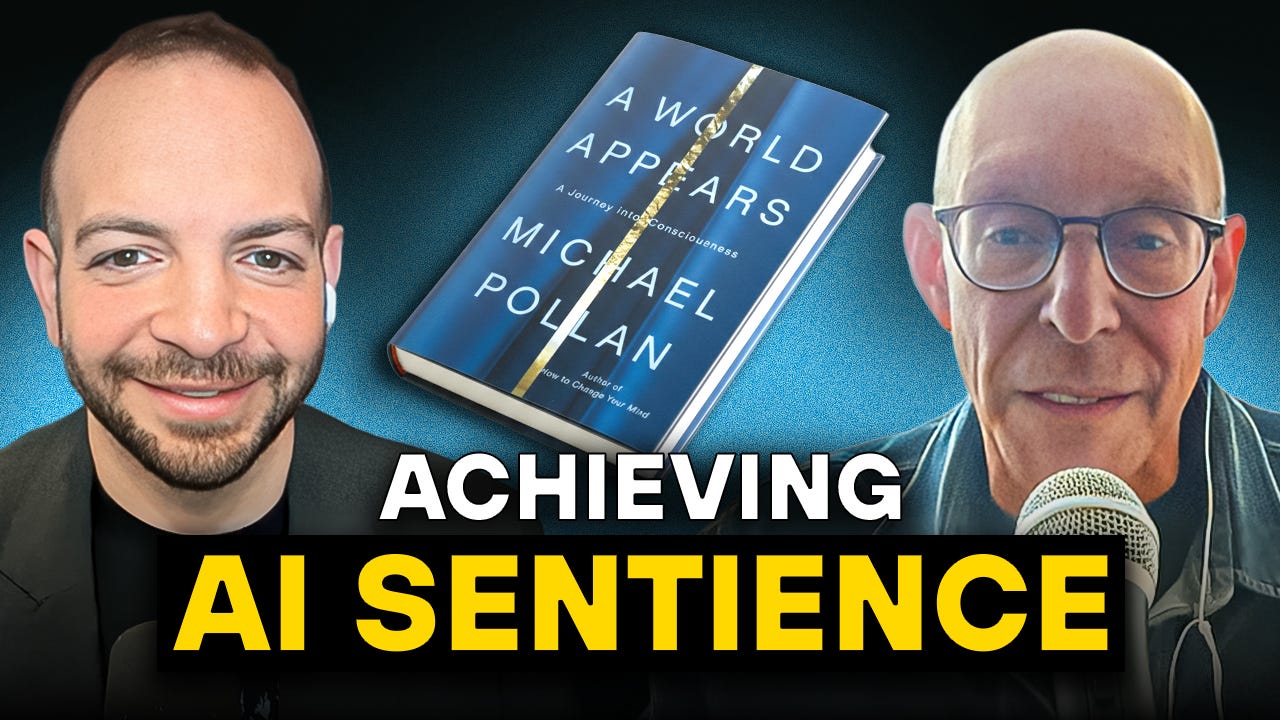
Michael Pollan, author of a newly released book “A World Appears,” recently joined Big Technology Podcast to talk about why he doesn’t think AI will ever be conscious. After decades of exploring the minds of both humans and plants, he’s much more skeptical that machines are able to achieve consciousness in the same way humans do. In fact, he thinks using the human brain as a metaphor for computers has serious flaws.
Unlike computers, human brains don’t have the same sort of “hard separation,” with the former operating in analog mode instead of digital. Pollan also thinks feelings are central to consciousness, and that’s still something that’s impossible for computers to experience.
The way Pollan sees it, having a conversation with a bot or any computer reduces or simplifies the very notion of what a conversation is: “You’re leaving out what’s going on between us right now, which is acknowledgement, skepticism, body language, all the subtleties of human conversation are stripped away.”
“The paradigm case is the emoji [and] accepting the emoji as a substitute for emotion,” Pollan said. “We have to be careful about that when we simplify these phenomena like machine consciousness… What are we doing to the word ‘relationship’ when we count that?”
You can listen on Apple Podcasts, Spotify, or your podcast app of choice
Join Big Technology’s Private Discord Server!
Where we’ll talk about this story, the latest in AI, the week’s podcast, and plenty more. You can sign up via the link below: